
Introduction
How can global sustainability agendas be aligned with competitive regional development strategies? Global sustainability agendas confront the challenge of turning climate commitments into tangible results, often in contexts of limited resources and constrained institutional capacity, especially at the subnational level, where the impacts of climate change are most directly felt (UNCTAD, 2023). Investment Promotion Agencies (IPAs) have emerged as strategic actors in this effort, attracting sustainable foreign investment and facilitating public–private partnerships that connect global priorities with local needs (WAIPA, 2022). At the subnational level, provinces and municipalities have become key players in implementing climate policies through tools such as local incentives and logistical support to attract sustainable investments, thereby linking global sustainability agendas to regional development goals. While drawing on Brazilian cases, this paper offers an internationally applicable framework, arguing that subnational IPAs are central catalysts in this process in different countries of the world. (Michelmann & Soldatos, 1990; UNCTAD, 2023).
Examples of such deliverables are visible in international networks such as C40, which links cities committed to climate action (C40 CITIES, 2025), and in global initiatives such as the UNFCCC’s Race to Zero campaign, which mobilizes governments and regions toward net-zero emissions by 2050 (Race To Zero, 2025). The success of these agendas depends on attracting low-impact companies and industries capable of creating green jobs and improving quality of life (Bruce & Stephenson, 2016).
To understand how these challenges are addressed in practice — and to extract lessons applicable to other contexts — we examined the case of Brazil, an emerging and strategically relevant country in the global energy transition debate. We spoke to 37 managers connected with the national and international IPA network to identify concrete practices already in place, the factors that facilitate or hinder their implementation, and the insights that can inspire governments and organizations in different regions to accelerate the shift toward a low-carbon economy.
The Strategic Role of Subnational IPAs
Across Brazil’s subnational IPAs, the collected narratives point to a common logic: public policy articulation, an innovation-friendly environment, and directed capital toward energy-transition priorities work together to move from centralized plans to place-based strategies that leverage regional strengths while engaging global opportunities. This integrated pattern shows how IPAs translate global sustainability commitments into tangible local actions by aligning regulatory frameworks, financial instruments, and innovation ecosystems (Figueira, Russo, & Rocha, 2024; Hochstetler & Viola, 2012).
The cases of Invest SP, Invest Minas, Invest Paraná, Investe Piauí, and Invest Rio reveal distinct yet interconnected patterns in operationalizing sustainability. Collectively, they illustrate how subnational IPAs mobilize local resources and global partnerships to drive energy transition and green development. An analysis of these examples identifies four interconnected functions: policy alignment, targeted investment attraction, cultivation of innovation ecosystems, and sustained multi-stakeholder engagement.
Policy alignment involves IPAs articulating public policies to match sustainability goals. Invest SP, for instance, exemplifies this by leveraging its region’s ethanol production strengths and proximity to the University of São Paulo (USP) to direct resources toward Green Hydrogen (H2V), linking local assets with global partners to accelerate new technologies. (INVEST SP, 2023). Invest Minas similarly emphasizes decarbonization through decentralization and accessible finance, promoting solar energy projects via structured credit and support for local entrepreneurs, linking local benefits to global climate objectives like “Race to Zero” (INVEST MINAS, 2024).
Targeted investment attraction filters capital mobilization for projects demonstrating alignment with sustainability criteria. Invest Paraná exemplifies this by making sustainability a core investment filter, requiring explicit alignment with UN Sustainable Development Goals (SDGs) and ESG practices. This prioritizes projects with demonstrable local benefits, such as energy production from agricultural residual biomass, generating social and environmental co-benefits (Gov. Estado do Paraná, 2024).
Cultivation of innovation ecosystems sees IPAs fostering green innovation by connecting startups, academia, and investors. Investe Piauí leverages wind and solar potential to build a green industry innovation ecosystem, attracting international ventures and establishing European offices to connect with technology providers (INVESTEPIAUI, 2024). Invest Rio creates energy and finance hubs, like the Center for Energy and Finance of Tomorrow (with MIT & CVM) and Porto MaraValley, linking startups, academia, and investors, promoting events and regulatory incentives to catalyze a green economy ecosystem (Russo, Figueira, & Rocha, 2025).
Finally, sustained multi-stakeholder engagement is crucial, evidenced by continuous collaboration. Invest Rio’s collaboration with local authorities and promotion of international events exemplify how a city-level IPA can catalyze a robust ecosystem. Invest Minas’s support for solar projects through structured credit demonstrates how decentralization scales energy production and yields environmental and financial benefits for citizens. (Russo, Figueira, & Rocha, 2025). The cases reveal four interlinked functions: policy alignment, investment attraction, innovation ecosystems, and multi-stakeholder engagement, which show how regional strengths can be marshaled to attract international capital, foster green innovation, and deliver local development benefits.
These examples, encoded in Table 1, show that despite regional differences, subnational IPAs can effectively translate the commitments assumed in the global sustainability agenda into local concrete deliverables, such as the energy and low-carbon transition, generating economic development and local competitiveness based on their regional capabilities, opening space for new sectors to be constituted.
A Framework for Action: Leveraging IPAs for Local Energy Transition
Brazilian experiences suggest that subnational IPAs can act as catalysts for FDI energy transition, coordinating across public and private fronts to direct capital toward SDG-aligned developments. Comparable subnational IPAs exist elsewhere, like the Koln Business (Germany), Business France, Kotra (South Korea), Swiss Next (Switzerland), EKN Sweden, and Invest Lisboa (Portugal) – all of which we had the chance to talk with the objective of creating international benchmarking. Above all those initiatives, the World Association of Investment Promotion Agencies (WAIPA) Green Investment Promotion initiative further supports comparability by fostering cross-border investment linkages.
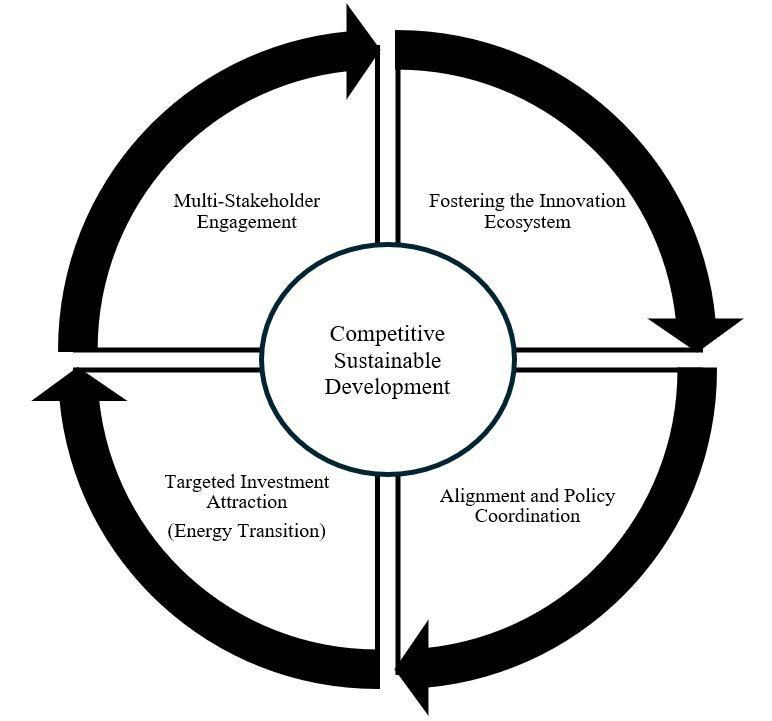
To assist policymakers, we propose the “Subnational IPA Strategic Compass” (Figure 1), a framework that organizes the core IPA functions into four interconnected pillars. This tool translates our findings into actionable guidance and can be operationalized in diverse regional contexts. The four pillars provide a prescriptive mechanism that helps to translate the framework into actionable guidance for policymakers and IPA managers. The integrated logic clarifies how abstract coordination and strategy become concrete actions, guiding the forthcoming recommendations. Moreover, the Subnational IPA Strategic Compass is novel in its explicit articulation of four interdependent functions and its translation into a practical instrument that can be operationalized in diverse regional contexts.
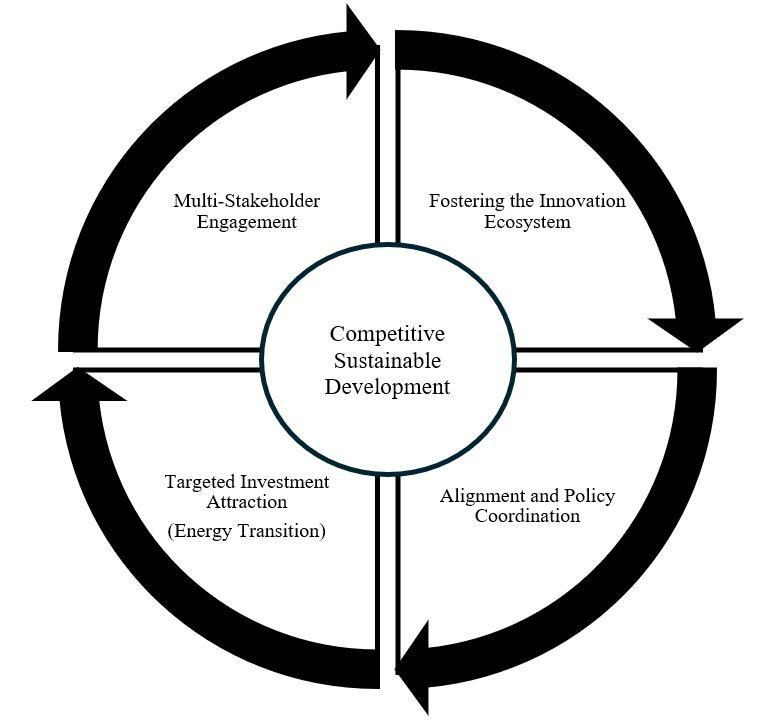
In the Alignment and Policy Coordination pillar, which deals with political alignment and policy coordination, despite obeying government interests, IPAs are not mere executors. They act as bridges that connect local needs and capabilities with national and foreign agendas that have the goal of sourcing financing, while aligning the interests and expectations of everyone involved. This coordination is vital to de-risk investments by ensuring policy coherence across governance levels. In the Target Investment Attraction pillar, instead of seeking any investment that increases the number of jobs and boosts the local Gross Domestic Product (GDP), the agencies map regional capabilities and direct their efforts to attract and facilitate specific projects that generate collective benefits, creating a compelling business case for international investors that aligns with global ESG mandates.
To the Multi-Stakeholder Engagement pillar, no transition occurs in isolation. IPAs function as essential articulators among the public and private sectors, academia, and civil society, ensuring projects gain a social license to operate by meeting community needs. Finally, in the Foster the Innovation Ecosystem pillar, an example of impact on subnational projects has been the energy transition, which is intensive in technological innovation and can foster the competitiveness of economic sectors. In this context, IPAs go beyond investment attraction and act as catalysts for innovation ecosystems, connecting local ventures with international capital and corporate R&D to scale up green technologies.
These four pillars do not function separately; they intertwine in a way that reinforces each other. Political alignment creates a safe environment for investment; investment validates policies and attracts innovation; innovation generates new opportunities for international investment and competitiveness; and engagement ensures the sustainability of the entire process for the continuity of the political alignment.
Actionable Recommendations for Policymakers and IPA Managers
Based on the lessons from Brazilian cases, the following recommendations can be formulated to strengthen the role of subnational IPAs as drivers of energy transition projects and promoters of local development.
Public Policymakers
Should formally expand IPAs’ mandates to include clear targets for green investment attraction and energy transition support. This signals political priority and directs agency efforts toward sustainability goals. As seen in some of the analyzed cases, when sustainability becomes a core performance indicator rather than a secondary consideration, IPAs can more effectively leverage their position at the intersection of the Political Alignment and Investment Attraction pillars of the presented framework. A concrete example is Invest Paraná, which integrates the SDGs and ESG criteria as central pillars in evaluating projects for government credit.
Additionally, policymakers should utilize IPAs as central platforms for dialogue among local, national, and global stakeholders. In an international setting, this could involve engaging with multilateral organizations such as the World Bank, UNCTAD, or the International Renewable Energy Agency (IRENA), as well as regional development banks and global climate initiatives like the Race to Zero. Dialogues might focus on aligning local investment strategies with global climate finance mechanisms, sharing best practices on green incentives, or co-developing regulatory frameworks that facilitate cross-border green investments. Such engagement would help to ensure that regional energy transition efforts are compatible with international standards and have the ability to attract global capital, technology, and expertise, strengthening both local competitiveness and global sustainability outcomes.
Looking into the cases we can see how IPAs can connect diverse actors and create ecosystems that accelerate the energy transition. By delegating to IPAs the function of identifying and removing regulatory bottlenecks, policymakers enable these agencies to fulfill their role in the Multi-stakeholder Engagement pillar, translating global sustainability commitments into local action. Invest Rio exemplifies this function through its innovation hub, which connects startups, academia, and investors to develop energy and sustainability ventures.
Similarly, policymakers should support IPAs in mapping and prioritizing renewable energy sectors that align with regional comparative advantages. This targeted approach can prevent resource dispersion by building on existing strengths. By helping IPAs identify these strategic sectors, policymakers enable them to operate effectively within the Investment Attraction pillar, creating clusters of complementary businesses that strengthen the local economy. For instance, Investe Piauí demonstrates this approach by focusing on the region’s wind and solar energy strengths, structuring an innovation ecosystem that attracts international ventures.
The proposed framework also highlights the importance of creating or adapting fiscal and non-fiscal incentives specifically for clean energy investments. Some projects analyzed delve into the integration of SDG and ESG criteria for project evaluation, demonstrating how sustainability can be embedded in investment decision-making. These incentives should be designed to support the Innovation Ecosystem pillar by encouraging technological advancement in priority sectors while avoiding subsidies to fossil fuel industries that contradict sustainability objectives. Invest Rio demonstrates this by partnering with public authorities to implement targeted tax incentives for technology and sustainable firms, fostering a green economy.
Finally, the framework also proposes that policymakers provide IPAs with adequate resources and technical training in climate finance, green technologies, and sustainable project negotiation. The sophisticated partnerships developed by some of the analyzed cases with research centers of local universities illustrate the importance of technical expertise. By investing in IPA capabilities, policymakers strengthen the agencies’ ability to operate across all four pillars of the Strategic Compass, particularly in fostering innovation ecosystems that drive the energy transition. Invest SP’s work demonstrates this capacity through its partnerships with USP, which have been crucial in directing resources toward ethanol-derived green hydrogen technologies.
Investment Promotion Agency Managers
IPAs should develop Green Market Intelligence by building expertise in identifying and actively prospecting investors aligned with regional renewable energy priorities. The success demonstrated in attracting international ventures for green hydrogen in the analyzed cases highlights the value of targeted intelligence. By monitoring global trends in climate finance and green innovation, IPAs can better position themselves within the Investment Attraction pillar, connecting local opportunities with global capital flows seeking sustainable returns. This type of targeted prospecting has been instrumental for Invest Minas in attracting large-scale solar energy projects, aligning local potential with global capital interested in decarbonization.
Additionally, Cultivate Innovation Partnerships also remain essential, as IPAs can proactively build bridges between the local productive sector, universities, and research centers to foster green innovation ecosystems. The work of some IPAs in facilitating partnerships between strategic industries of the country, such as the automotive sector and local universities for hydrogen technology development, exemplifies this approach. These connections, central to the Innovation Ecosystem pillar in the framework, can create virtuous cycles where research leads to commercial applications, attracting further investment and talent. Similarly, Invest Rio demonstrates this practice by creating hubs such as Porto MaraValley, which serve as bridges connecting startups, academia, and investors around sustainable ventures.
IPAs managers should also focus on implementing Advocacy and Facilitation Practices by mapping regulatory barriers to green investments. In this sense, communicating these challenges to policymakers while serving as “one-stop shops” for sustainable project investors becomes essential. The examples analyzed showed that the work with municipal authorities to reduce taxes on technological enterprises could be understood as an effective advocacy practice. By streamlining processes for green investors, IPAs strengthen their position in both the Political Alignment and Investment Attraction pillars, reducing friction in the investment process. Invest Minas’ policy embodies this facilitator role by providing infrastructure and credit to local producers, removing barriers to the construction of decentralized energy plants.
Another relevant activity is to Actively Engage with International Networks. By connecting with global platforms like WAIPA, UNCTAD, and climate initiatives to access knowledge, best practices, and potential investors, the establishment of international offices in European cities, as in the cases of Investe Piaui and Invest SP, shows how global engagement can attract technology and innovation towards green projects. These connections, part of the Multi-stakeholder Engagement pillar of the framework, position IPAs as bridges between global sustainability networks and local implementation.
At the end, developing Comprehensive Impact Metrics by the creation of measurement systems that evaluate not just investment volume but also sustainability impacts – clean energy generation, emissions reduction, green job creation, and SDG alignment – becomes another important task for IPA managers. Several of the analyzed cases had demonstrated focus on decentralized energy production that benefits local farmers while reducing emissions, exemplifying this holistic approach. For example, Invest SP produces reports with diverse metrics, including the impact of the green economy in terms of the number of investments, investment values, and jobs created. By transparently communicating these results, IPAs can strengthen accountability and demonstrate the value of their work across all four pillars of the Strategic Compass.
These recommendations, if followed not as isolated interventions but as an integrated approach – where policy support enables IPA action, and IPA successes inform better policy – if implemented cohesively, can create a virtuous cycle that accelerates the energy transition while strengthening local economic development and competitiveness.
Conclusion
Subnational IPAs are more than business facilitators; they are pivotal actors in the green transition, acting as strategic links between global goals and local needs. As the Brazilian cases demonstrate, when equipped with a clear mandate and resources, IPAs can leverage the four functions of policy alignment, targeted investment, innovation fostering, and multi-stakeholder engagement to build a sustainable and prosperous future. The challenge for policymakers is to recognize this potential and create institutional conditions for them to succeed.
Acknowledgements
This work and its respective authors were supported by the National Council for Scientific and Technological Development (CNPq), Process 301548/2025-0, and the Carlos Chagas Filho Foundation for Research Support of the State of Rio de Janeiro (FAPERJ), Process E-26/210.054/2025.
About the Authors
Gustavo Gomes Rocha graduated in Law from the Getúlio Vargas Foundation of Rio de Janeiro (FGV DIREITO RIO) and in International Relations from the Institute of International Relations and Defense of the Federal University of Rio de Janeiro (IRID-UFRJ).
Ariane Roder Figueira has a PhD in Political Science from the Graduate Program in Political Science at the University of São Paulo (USP ). She is Associate Professor of International Business at the COPPEAD Graduate School of Business of the Federal University of Rio de Janeiro (UFRJ) and Research Productivity Fellow at PQ/National Council for Scientific and Technological Development - CNPq.
Eduardo Russo has a PhD in Business Administration from the Graduate Program in Administration at the Federal University of Rio de Janeiro (UFRJ). He is Assistant Professor of International Business at the Rio Grande College of Business of Sul Ross State University (SRSU).