
Introduction
A social innovation (SI) is a systemic process of introducing ideas, products, processes, or programs that create solutions to address social, environmental, or community challenges (Horgan & Dimitrijević, 2018; Mulgan, 2006). It is a system that strategically combines products, services, business models, policies, technologies, processes, or partnerships to address complex problems that governments are unable (or unwilling) to solve (Tykkyläinen & Ritala, 2021). These innovations aim to create positive, sustainable change; improve people’s lives and their environments; and promote social justice or generate social value by balancing business objectives. The World Intellectual Property Organization (WIPO) highlights the vital role of social businesses in tackling global societal concerns in its 2024 Global Innovation Index.
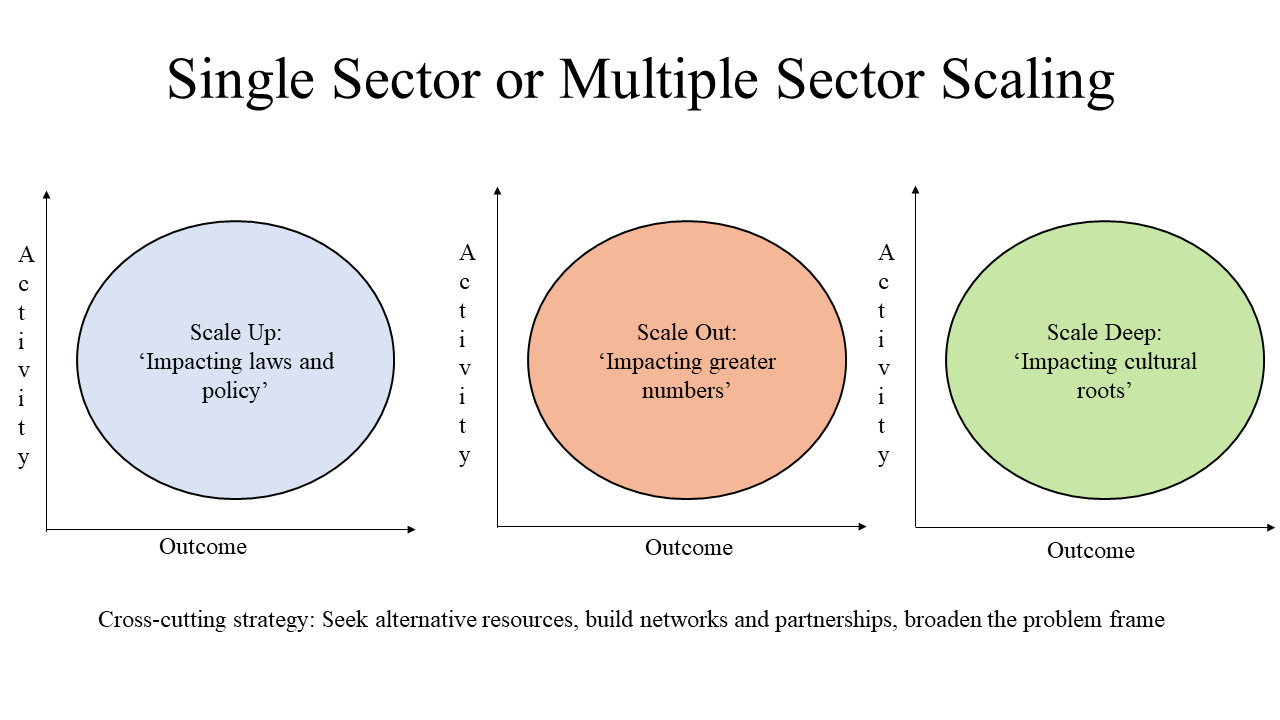
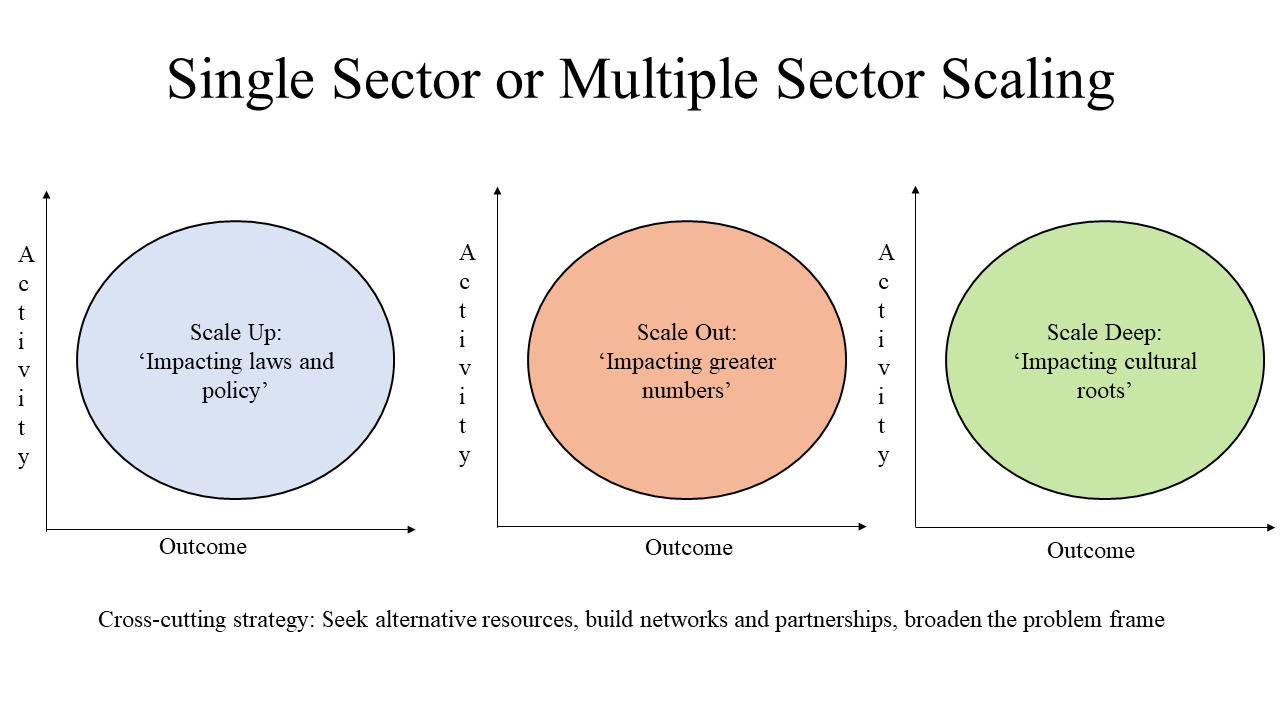
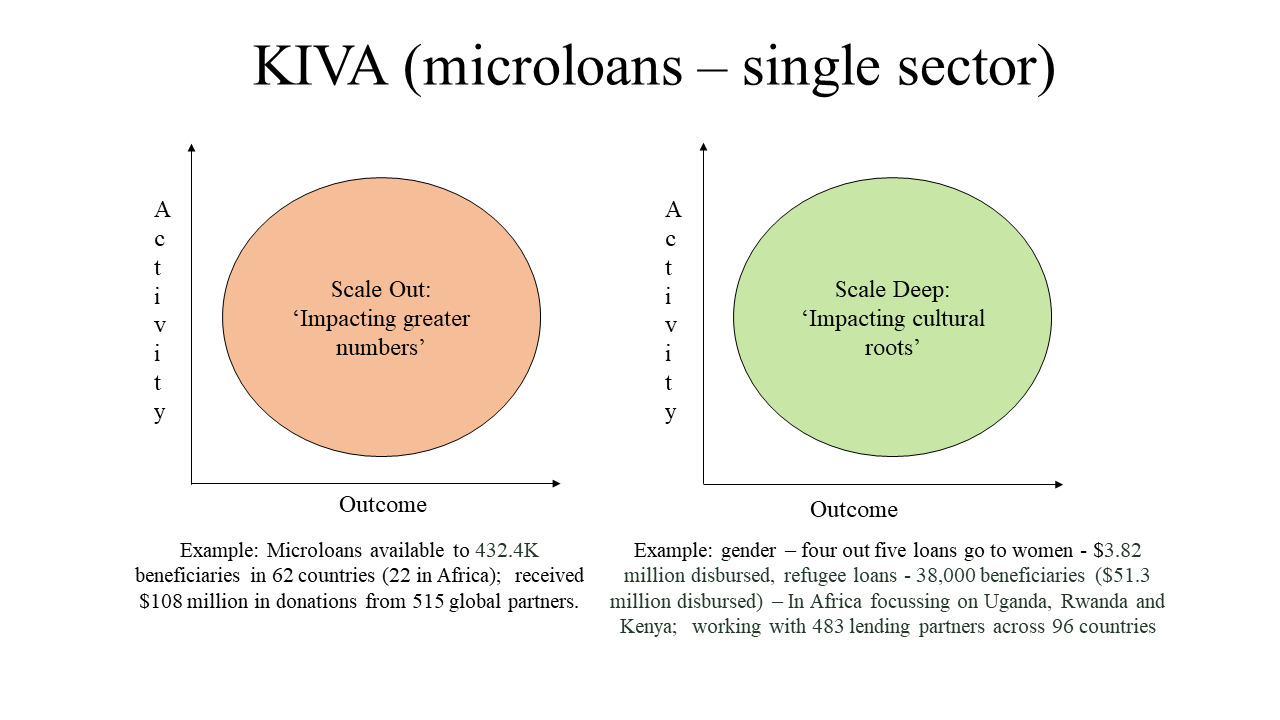
Traditional IB theories focus on financially-driven multinational enterprises (MNEs) and offer a limited understanding of how SIs cross borders (i.e., SI scaling). Successful SI scaling is not just about entering new geographic markets but is measured by impact on beneficiaries. However, it can also be assessed by looking at where resources, such as funding or legitimacy, are sourced to scale. SI scaling strategies depend on whether the goal is (1) scaling out, (2) scaling up, (3) scaling deep, or a combination of the three, at an international or national level. These SI strategies can be based on the impact (activity versus outcome) or its generalizability (multisector or single sector). In Figure 1, we depict various examples of SI scaling.
Background: M-PESA and Kiva in Africa
We consider two longitudinal SI cases: M-PESA, from Kenya, which morphed into a for-profit organization that is available in eight countries. The second case is Kiva, from the USA, a non-profit that serves 22 countries in Africa. Given the limited number of IB studies on SI scaling, we adopt an interdisciplinary lens, focusing on three factors – legitimacy, funding, and impact – and use the two cases to provide insights.
M-PESA
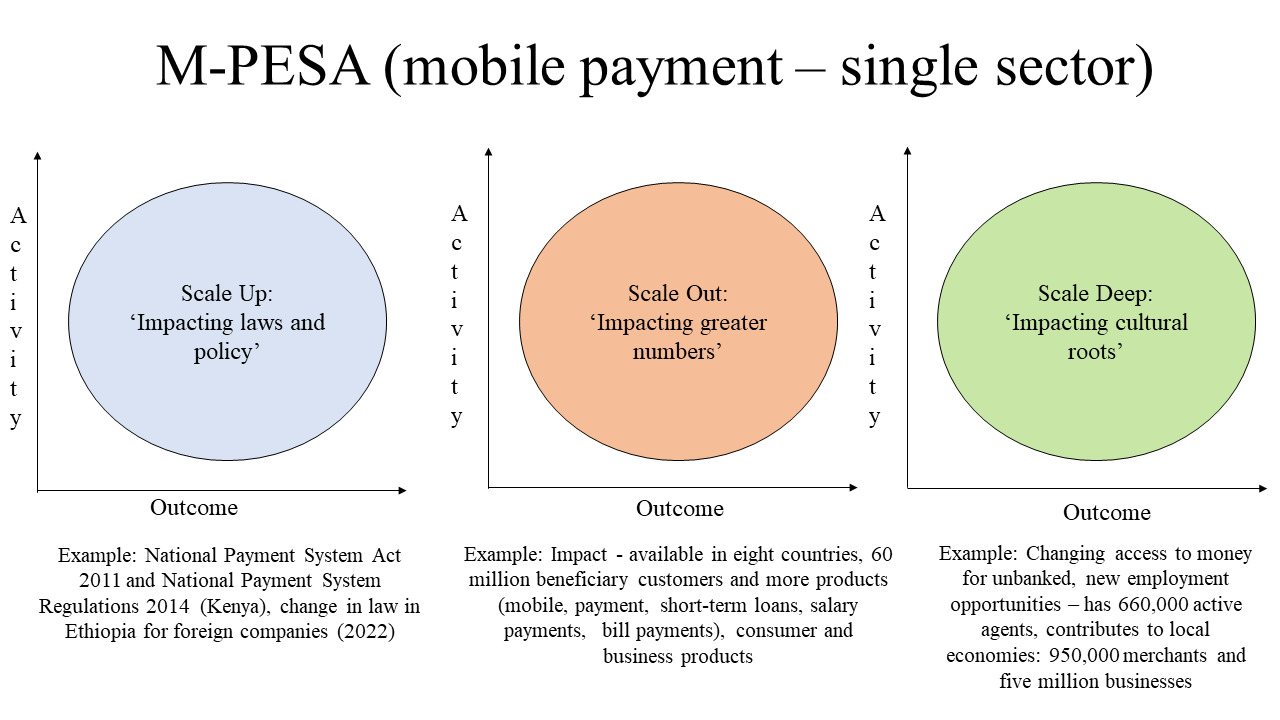
Africa has 54 countries, which exhibit varying degrees of dependence on foreign aid and remittances. This is a pattern that can create structural vulnerabilities and constrain the development of self-sustaining systems, making SIs very important. M-PESA is a pioneer in mobile money in a market where traditional banking penetration was historically low. By late 2025, M-PESA was adopted by 60 million customers across eight countries. As depicted in Figure 2, M-PESA scales up, down, and deep using cross-cutting strategies. The technology platform is configured differently across countries, with a complex licensing agreement for rights with M-PESA, Safaricom (Kenya), and Vodafone (UK).
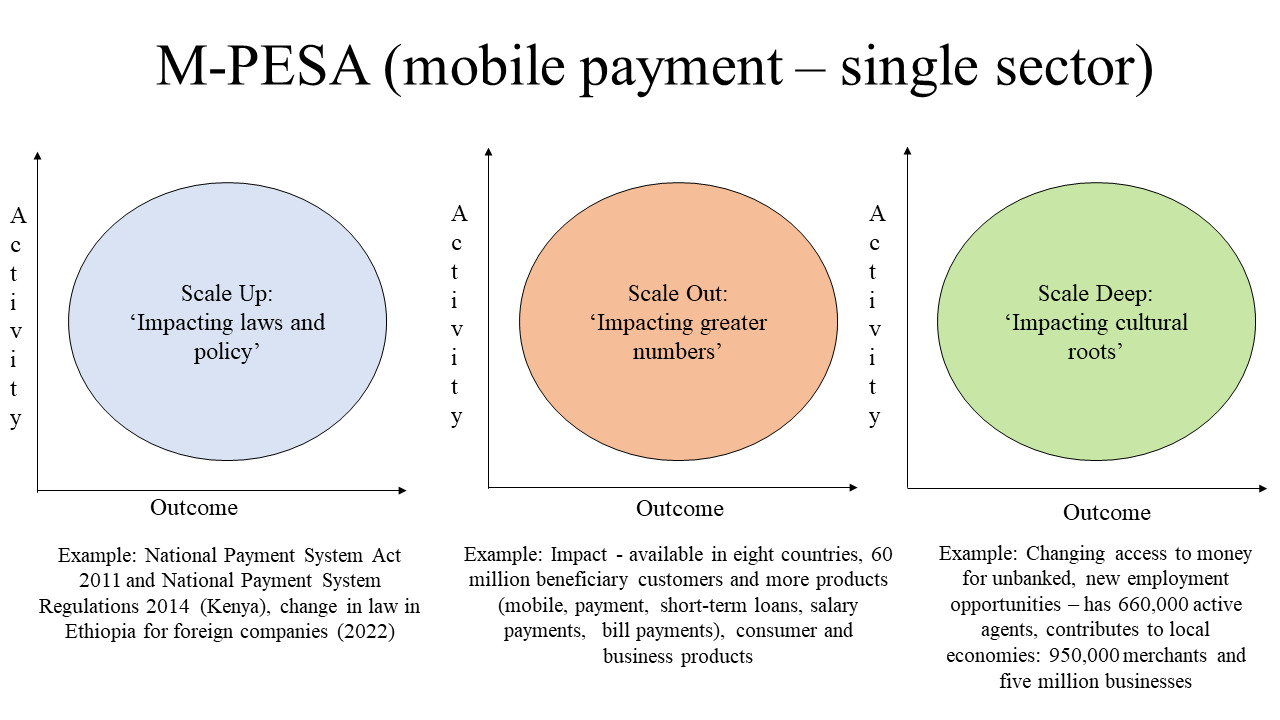
M-PESA began with a 2003 proposal from Vodafone UK to access funding from the UK’s Department for International Development’s (DFID). The pilot for SMS-based money transfers was launched by Safaricom, Kenya’s largest mobile network operator. At the time of piloting, there was no national payment and settlement law in Kenya, necessitating a regulatory innovation. In 2009, the Central Bank of Kenya contracted Bankable Frontiers to develop draft guidelines for the National Payments System (NPS). These guidelines, which resulted in laws in 2011 and 2014, were used by the Central Bank of Kenya to regulate and protect the market. Finally, Vodacom and Safaricom acquired the M-PESA brand from the Vodafone Group in 2020 and established a JV: M-PESA Africa.
Kiva
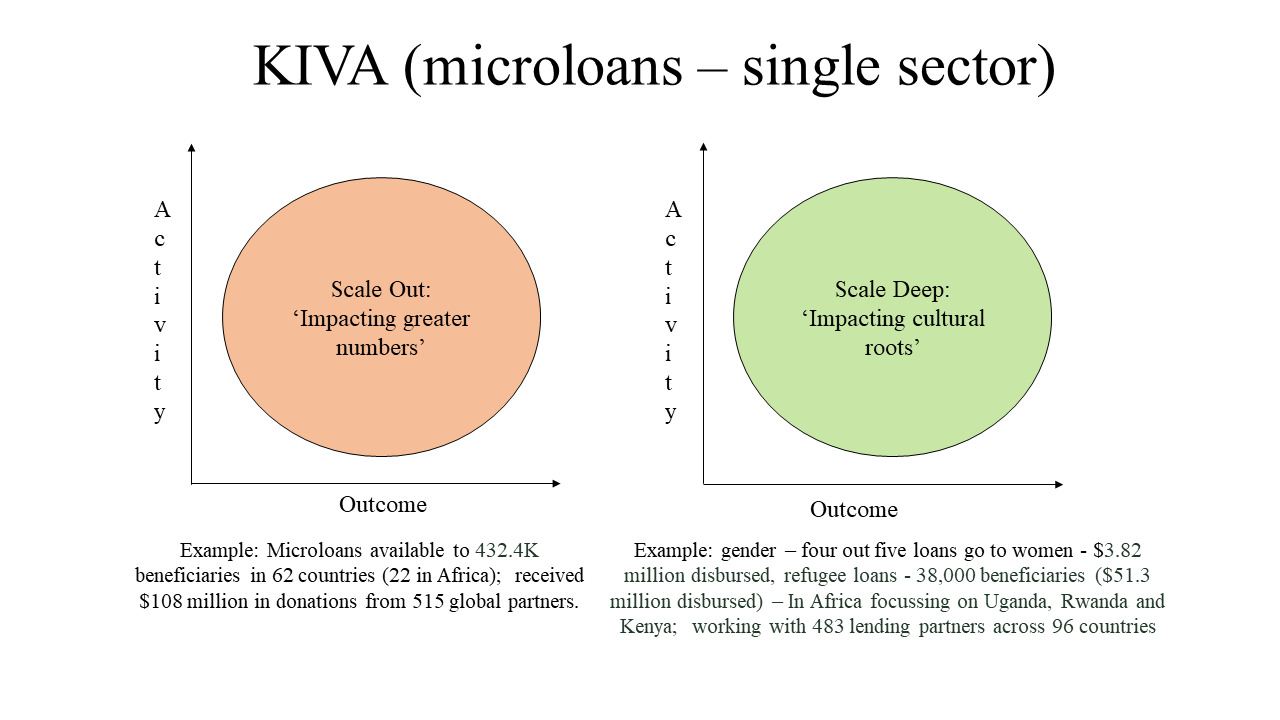
Kiva, headquartered in San Francisco, operates in the microfinance industry. It facilitates lending in Africa through its technology app. Kiva’s first loan of US$500 was to a woman in Uganda to expand her fish-selling business. Kiva’s crowdfunding platform collects funds and disburses them to beneficiaries across 62 countries, including 22 in Africa. Borrowers repay the loan, which is then used to fund the next loan. As shown in Figure 3, Kiva scales out and deep.
Factors Influencing Social Innovation Scaling
While many factors can affect scaling of SIs (see Online Appendix), we focus on the three factors that we observed during the longitudinal case study analysis – legitimacy, funding, and social impact. These factors also align with the resource-based view.
Legitimacy
Legitimacy is defined as the collective recognition of an entity’s actions as suitable or desirable (Verleye, Perks, Gruber, & Voets, 2019). SIs often fill gaps in areas where formal structures are lacking (e.g., institutional voids) and where non-market factors are at play. To survive and achieve competitive advantage in these uncertain markets, SEs need to gain legitimacy from their beneficiaries, funders, regulators, and other competitive stakeholders, locally and/or internationally. As observed in both the cases, legitimacy originates from many sources, including founders’ credibility, their networks (relating to education, partners, alliances, etc.), media (self or independent), awards and certifications, and governmental support (home or host). The SE’s prior experience, particularly international, across various sectors (private, public, academic, or non-profit) seems to play an important role in influencing early internationalization.
For M-PESA, legitimacy was gained through the UK government’s DFID grant and the fact that Safaricom was jointly owned by Vodaphone and the Government of Kenya. In addition, the partnership with the local Kenyan mobile network operator, i.e., Safaricom in Kenya, proved to be crucial to reach customers. Over time, endorsements and collaborations with influential institutions such as the World Bank, GSMA, the Bill & Melinda Gates Foundation, and the Commercial Bank of Africa further enhanced M-PESA’s legitimacy. As M-PESA was launched across new countries, scaling of this SI, required ongoing nurturing of its legitimacy in the form of national government support and collaborations with influential institutions.
Kiva co-founders, Matt and Jessica Flannery, while creating their website in San Francisco were simultaneously working in East Africa with non-profits to develop their idea. Their exposure to entrepreneurial and academic environments at Stanford University contributed to shaping the venture’s development. Kiva’s legitimacy received an additional boost when it was featured on the Oprah Winfrey Show and when LinkedIn’s co-founder, Reid Hoffman, a Stanford alumnus, joined its board. Thus, Kiva’s legitimacy came from its investors, the founding team’s networks (educational and personal), and the media.
Funding
To scale, SIs require either an innovative business model or access to external funding. Some SIs secure funding from governments (home or host) or the corporate sector, requiring them to document their value through formal evaluative tools such as investment appraisals, impact assessments, social return on investment (SROI), or the broader notion of “blended value”, which captures both financial and social outcomes (Mulgan, 2006). For example, the idea of M-PESA was initially rejected by Vodafone’s senior leadership; however, the project coalesced after a meeting at the World Summit for Sustainable Development, where DFID was seeking a way to access rural Africa to distribute aid payments. Though Vodafone won the DFID Financial Deepening Challenge Fund grant (a 50% matching grant), it took two years for the program to launch. M-PESA reached one million users in its first year due to the financial backing.
On the other hand, Kiva.org launched as one of the first crowdfunding platforms enabling developed country users to fund microloans for global projects of their choice. The Kiva 2024 Annual Report indicated that most contributions were made by individual donors (65%), followed by corporations (24%) and foundations (11%). Kiva’s partnership with the Gates Foundation helped it to scale financial inclusion, reaching underserved communities to alleviate poverty.
Sometimes, SIs get ‘free’ resources. For example, the connection with co-founder Premal Shah, who was an early employee at PayPal, helped in fostering the partnership with PayPal, where online transactions fees for Kiva are waived and on a promotional campaign basis, credit is given to early lenders. This fee waiver reduces wire transfer costs and better matches borrowers’ repayment schedules to local business contexts. Combined with Kiva’s 96% repayment rate, these funding partnerships (in-kind or cash) have helped Kiva scale.
Our case analysis suggests that partnerships can help reduce costs or facilitate entry into new markets. The M-PESA platform, which started as an SMS system, has evolved into a SuperApp that enables cross-subsidization of new products such as retail, food delivery, transport, and government services, as well as working with aid organizations such as the World Food Programme. In 2016, the Mastercard Foundation and Kiva signed a five-year partnership to test and scale financial services for rural farming communities in Sub-Saharan Africa. Thus, the SIs’ funding sources and cross-subsidization strategies for other SI products evolve as they scale.
Social Impact
Social impact is defined as “beneficial outcomes… enjoyed by the intended targets of that behaviour and/or by the broader community of individuals, organizations, and/or environments” (Rawhouser et al., 2019: 83). As observed in our empirical analysis (as reflected in Figures 2 & 3), the social impact of SIs can transcend national boundaries and be scaled by using technology to reach beneficiaries.
M-PESA’s product offerings have expanded to include mobile phone-based microfinance, payments, and money transfer services, facilitating approximately US$10 billion in transactions each month through 660,000 agents. It connects 950,000 merchants and 5 million businesses by transitioning from consumer to business markets, contributing to the financial inclusion of 84% of the population in the countries where it operates, with four out of five loans going to women. Kiva’s global impact is noteworthy in that it has funded US$2.3 million in loans with lenders coming from 187 countries and reached five million people thus, connecting donors and consumers across nations.
Insights for Social Innovators and IB Scholars
In line with prior IB research that acknowledges that SIs can help fill institutional voids (Matus-Ruiz, Saka-Helmhout, & Carillo, 2025), we observe in our two cases, that this was done by creating new “rules of the game”: creating new industries (mobile-money or electronic crowd-sourced micro-lending), or changing regulations (M-PESA). Though countries may have weak regulatory systems and underdeveloped infrastructure, they also offer tremendous untapped market opportunities, and in the case of M-PESA and Kiva, they overcame institutional voids by also using digitalization to reach their beneficiaries. Specifically, we find that legitimacy, funding, and social impact can be used to scale SIs globally.
The SI’s impact can be a double-edged sword, with unintended consequences arising from their business models, that could include the exploitation of vulnerable communities. Sometimes, well-intended SIs may be hijacked by powerful actors in weak institutional environments. In emerging-market contexts, where economies are growing rapidly (sometimes disproportionately across regions), it results in changing beneficiary needs, institutional contexts, or the power dynamics between stakeholders, which can pose unforeseen challenges and lead to mission drift. Hence, SI owners must balance financial outcomes and social impact by bridging various tensions.
Performing tensions arise from different goals and conflicting priorities among stakeholders. M-PESA, initially intended only for the unbanked, has now evolved into a SuperApp. M-PESA’s transition from a pilot funded by a grant to a foundation, and eventually, becoming a part of a listed company has created a conflict between maintaining its original social value proposition and achieving shareholder expected economic returns. This raises an interesting question for future research – How does an SI scale across various stages of internationalization?
Organizing tensions arise when there is friction between the cultures of organizations involved with the SI. For Kiva and M-PESA, the local context and partnerships proved to be essential backdrops for creating sustainable impact. As M-PESA was embedded through local agent networks, Vodafone’s global governance structure and Safaricom’s banking context of a cash-based economy created cultural and structural frictions. Since some key resources are location-specific, the SI may not be able to operate remotely without a local partner (scaling deep and out). This leads to organizing tension like changing organizational structures and mission that may lead to distorting the initial social goals. Future researchers can study how SIs achieve their goals and scale internationally while adapting their organizational structures to fit partner’s needs.
Belonging tensions arise from identity issues, such as country-of-origin (COO) effects, representation practices, and trust in founders. For Kiva, belonging tensions originate from the fact that the platform has a US-based philanthropic identity, and when lending to international borrowers, lender affinity biases develop that shape perceptions of legitimacy and inclusion in the global microfinance industry. Maintaining legitimacy is also crucial; Kiva’s legitimacy for lenders, as reflected in rating systems like Charity Navigator, adds international value (scaling out). Future research can look at this issue from multiple perspectives, such as evaluating COO effects for SIs and the impact of institutional distance between funding sources and SIs’ beneficiaries.
Learning tensions arise between short- and long-term goals. For Kiva, learning tensions emerged from the misalignment between the platform’s short-term goal of rapid loan funding and its long-term developmental objectives, compounded by the high transaction costs of cross-border knowledge acquisition (Zahra, Ucbasaran, & Newey, 2009), which leads lenders to rely on simplified and potentially biased borrower information. In the case of M-PESA, this tension was observable where they had to co-create regulations to ensure legitimacy (scale up).
A promising line of future research is to examine the role of bricolage, where available resources are used to exploit new opportunities, in managing these tensions (Mateus & Sarkar, 2024). Bricolage refers to the creation of novel solutions through the recombination of resources that already exist within the collective social consciousness. In organizational and SI contexts, social bricolage can be enacted by the individual or collective actors, where actors and social networks recombine available resources through the negotiated sharing of space, time, capabilities, and repertoires to sustain a social mission under constraints. M-PESA exemplifies bricolage as Safaricom recombined existing telecommunications infrastructure, airtime transfer systems, informal cash economies, and social trust networks of local agents to create a new financial system in Kenya, demonstrating social bricolage through the negotiated integration of formal telecom resources and informal market practices. Kiva demonstrates social bricolage by recombining digital platform technology, microfinance institutions, storytelling narratives, and dispersed global lender networks to construct a peer-to-peer micro-lending system, where existing financial and social resources are reconfigured through the negotiated coordination of resources across actors, time zones, and institutional contexts. Bricolage can be used strategically as an umbrella strategy (e.g., Kiva) or a parallel strategy (e.g., M-PESA under Safaricom or in each country of operation) to achieve value for customers or beneficiaries. The social bricolage strategy allows SEs to leverage available internal and external network resources, and involve stakeholders in the social mission. Hence, depending on their scaling frame –up, out and/or deep, SIs should plan the types of resources needed with growth.
Conclusion
The phenomenon of SI scaling is a complex, multifaceted process supported by a founder’s international networks in factors like legitimacy, funding, and social impact reach. For SEs that want to internationalize, identifying networks among diverse stakeholders for collaboration across borders can enable SIs to scale impact. This requires managing performing, organizing, belonging and learning tensions to balance financial and social outcomes. For researchers, the process of scaling necessitates a deeper exploration of success measures for SIs that may extend beyond markets and effects. As SIs increasingly tackle global challenges, understanding the mechanisms behind their diffusion process is crucial for achieving sustainable solutions. In this paper, we present a starting point for future researchers to explore the international scaling of SIs, an under-researched area in IB, and provide some insights for SE working in this field to manage their SI’s responsibly.
Acknowledgements
We would like to thank the AIB Insights Editor, Professor Elizabeth Rose and the anonymous reviewers for their insightful comments and constructive feedback, which have helped us improve the manuscript.
About the Authors
Melodena Stephens is Professor of Innovation & Technology Governance at the Mohammed Bin Rashid School of Government in Dubai. She is a globally recognized speaker, expert and strategist, consulting and training government leaders and organizations like Council of Europe, IEEE, WEF, and Meta. Her expertise is frontier markets (social entrepreneurship, space economy, AI governance and miliary business) and crisis management. She is the founder of the Academy of International Business MENA chapter, raising visibility and advocacy on the region.
Tanvi Kothari (Temple University, Ph.D.) is a Professor of International Business and Strategic Management and the Director of the MBA Programs in the Lucas College and Graduate School of Business at San Jose State University (SJSU). Her area of research interests includes - innovations originating in emerging markets, migrant entrepreneurship and strategic impact of digitization on organizations. She actively provides strategic and research expertise to entrepreneurs, angel investors, and start-ups in the AI space in emerging markets.
Sadaf Khurshid, PhD, is an academic and researcher specializing in entrepreneurship, culture, and networks. With an MBA and a background in engineering, she has been involved in social enterprises since 2014, publishing on the MENA region. Currently she is the Vice Chair (Marketing and Outreach) and WAIB representative in Academy of International Business – the Middle East North Africa Chapter. A dedicated educator and community advocate, Sadaf is committed to inspiring impactful change.